
Understanding the Key Components and Challenges of Apple's Supply Chain Strategy
- Nina K
- Jan 28
- 4 min read

Apple’s supply chain is often cited as one of the most efficient and effective in the world. Behind every iPhone, MacBook, or iPad lies a complex network of sourcing, manufacturing, and distribution processes that work seamlessly to deliver high-quality products to millions of customers globally. Understanding how Apple manages this intricate system reveals why the company consistently leads in innovation and market success.
This post explores the key components of Apple’s supply chain, how the company maintains efficiency and quality, the challenges it faces, and the overall impact of its supply chain strategy on business performance.
Key Components of Apple’s Supply Chain
Apple’s supply chain consists of three main pillars: sourcing, manufacturing, and distribution. Each plays a crucial role in ensuring products meet Apple’s standards and reach customers on time.
Sourcing
Apple sources components from a wide range of suppliers worldwide. The company relies heavily on specialized parts such as chips, displays, and batteries, which come from suppliers in countries like Taiwan, South Korea, Japan, and China. Apple maintains strict standards for suppliers, requiring them to meet quality, environmental, and labor guidelines.
Apple’s sourcing strategy includes:
Supplier diversification: Apple avoids dependence on a single supplier by working with multiple vendors for key components. For example, it sources OLED displays from both Samsung and LG.
Long-term partnerships: Apple builds strong relationships with suppliers, often investing in their capacity and technology to ensure steady supply.
Sustainability focus: Apple pushes suppliers to reduce carbon emissions and use recycled materials, aligning with its environmental goals.
Manufacturing
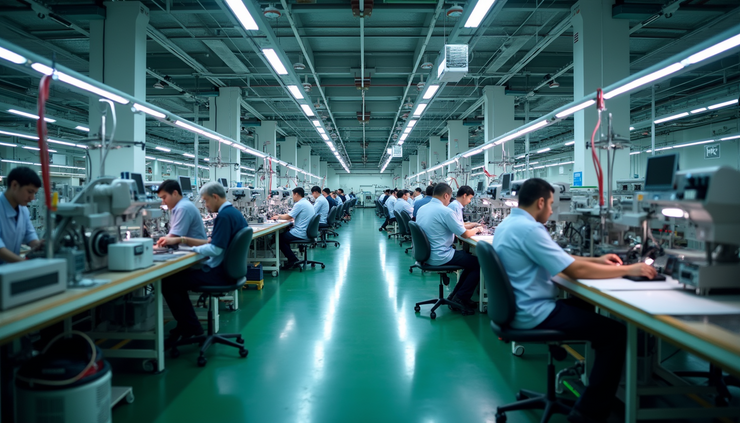
Manufacturing is primarily outsourced to contract manufacturers, with Foxconn and Pegatron being the largest partners. Apple designs its products in California but relies on these manufacturers to assemble devices, mostly in China.
Key aspects of Apple’s manufacturing include:
Precision and scale: Apple’s products require exacting assembly standards. Manufacturers use advanced robotics and skilled labor to meet these demands.
Flexibility: Apple adjusts production volumes based on demand forecasts, ramping up or slowing down quickly to avoid excess inventory.
Quality control: Apple implements rigorous testing at multiple stages to catch defects early. This includes automated inspections and manual checks.
Distribution
Apple’s distribution network covers retail stores, online platforms, and third-party resellers worldwide. The company uses a combination of centralized warehouses and regional distribution centers to speed delivery.
Distribution highlights:
Global reach: Apple ships products to over 100 countries, managing customs, tariffs, and local regulations efficiently.
Direct-to-consumer focus: Apple’s own stores and website allow it to control the customer experience and gather valuable sales data.
Inventory management: Real-time tracking systems help Apple balance stock levels, reducing shortages and overstock situations.
How Apple Maintains Efficiency and Quality Control
Apple’s supply chain success depends on its ability to keep costs low while maintaining high quality. The company achieves this through several strategies:
Integrated planning: Apple uses sophisticated software to forecast demand and plan production. This reduces waste and ensures components arrive just in time.
Supplier audits: Regular inspections and audits ensure suppliers comply with Apple’s standards. Non-compliance can lead to contract termination.
Lean manufacturing: Apple encourages manufacturers to adopt lean principles, minimizing inventory and streamlining workflows.
Innovation in logistics: Apple invests in technology such as automated warehouses and advanced tracking to speed up order fulfillment.
Employee training: Apple and its partners train workers extensively to maintain quality and safety standards.
For example, during the launch of the iPhone 12, Apple coordinated closely with suppliers to secure enough 5G components despite global shortages. This proactive approach helped Apple meet launch deadlines without sacrificing quality.
Challenges Apple Faces in Its Supply Chain
Despite its strengths, Apple’s supply chain faces several challenges that require constant attention.
Global Disruptions
Events like the COVID-19 pandemic exposed vulnerabilities in Apple’s supply chain. Factory shutdowns, shipping delays, and component shortages caused production slowdowns. Apple responded by diversifying suppliers and increasing inventory buffers to reduce risk.
Trade tensions between the US and China also pose risks. Tariffs and export restrictions can increase costs or limit access to key components. Apple has started shifting some production to countries like India and Vietnam to reduce reliance on China.
Sustainability Issues
Apple aims to reduce its environmental impact, but sourcing materials like rare earth metals and cobalt involves ethical and ecological concerns. Mining these materials can harm communities and ecosystems.
Apple addresses this by:
Using recycled materials in products and packaging.
Auditing suppliers for responsible mining practices.
Investing in renewable energy for manufacturing sites.
Still, balancing sustainability with cost and supply reliability remains a challenge.
Complexity and Scale
Apple’s supply chain spans thousands of suppliers and partners. Managing this complexity requires constant coordination and transparency. Any disruption in one part can ripple through the entire system.
How Apple’s Supply Chain Strategy Impacts Business Success
Apple’s supply chain is a key driver of its market leadership and profitability. Here’s how:
Speed to market: Efficient sourcing and manufacturing allow Apple to launch new products quickly, capturing consumer interest and beating competitors.
Product quality: High standards in production and quality control build customer trust and brand loyalty.
Cost management: By controlling supply chain costs, Apple maintains strong profit margins even with premium pricing.
Customer experience: Reliable distribution ensures products are available worldwide, supporting Apple’s reputation for excellent service.
Innovation enablement: Close collaboration with suppliers helps Apple integrate new technologies faster.
For instance, the seamless rollout of the iPhone 13 during a period of global chip shortages demonstrated Apple’s supply chain resilience. This helped Apple increase its market share while many competitors struggled.
Apple’s supply chain is a powerful example of how careful planning, strong partnerships, and continuous improvement can create a competitive advantage. Companies looking to improve their own supply chains can learn from Apple’s focus on quality, flexibility, and sustainability.
By understanding and adapting these principles, businesses can better navigate today’s complex global markets and meet customer expectations.


